The Loss of Sophie Mol
The God of Small ThingsThe Loss of Sophie Mol is the grief that remains after the child herself recedes from memory: an almost living presence in Ayemenem House and a force that carries Rahel from childhood into womanhood. The novel makes bereavement more durable than recollection, while linking the family’s loss to the forbidden crossings of love and kinship that precede Sophie Mol’s death.
A Presence in the House
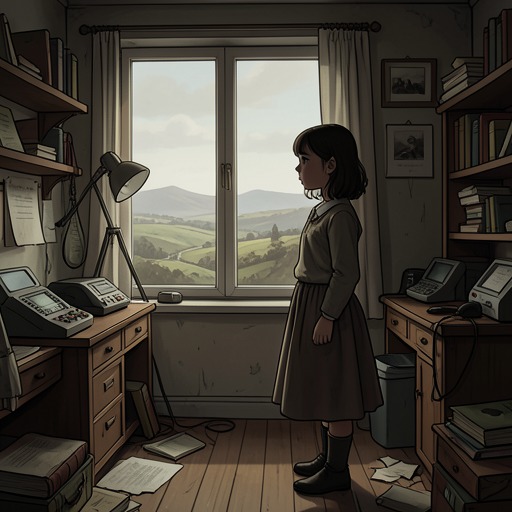
The loss does not announce itself as a single, contained episode of mourning. It moves quietly through Ayemenem House, lodging in books and food, in Mammachi’s violin case, and in the scabs on Chacko’s shins, which he constantly worries. The image makes sorrow tangible without reducing it to a display: grief has settled among familiar possessions and bodily habits, woven into the household’s ordinary life.
That quiet persistence is sharpened by the contrast between Sophie Mol’s fading memory and the growing force of her loss. She is remembered as a child who asked where old birds go to die and why dead ones do not fall from the sky like stones; she had also spoken of racial belonging and recalled seeing a man injured in an accident. Yet, over the years, these particulars grow less vivid, while the Loss of Sophie Mol becomes, in the narration’s striking image, a fruit that returns in every season. The absence outlasts the life it took.
The Family’s Bereavement
The loss shapes the survivors unevenly. Chacko and Mammachi are described as slumped in bereavement, grown soft with sorrow; they provide Rahel with food, clothes, and school fees, but withdraw the concern that care might otherwise imply. Their practical provision keeps her childhood materially supported, while their emotional withdrawal leaves the household defined by what it can no longer restore.
The narrative thus presents grief not only as a feeling but as a condition of family life. It inhabits objects, bodies, and routines, and persists even as the person mourned becomes harder to remember. Its reach is measured by duration: the loss ushers Rahel through repeated changes of school and onward into womanhood.
Transgression and the Laws of Love
Looking back, Rahel sees that the family’s difficulty with classification reached beyond the distinction between jam and jelly. Ammu, Estha, and Rahel were among those who broke rules, but they were not alone: the family crossed into forbidden territory and tampered with the laws prescribing who could love whom, and how much. Those laws also assign identities and boundaries—grandmothers, uncles, mothers, cousins, jam, and jelly—and the family’s breaches unsettle the categories that appear ordinary and fixed.
The loss belongs to a time when uncles became fathers, mothers became lovers, and cousins died and had funerals. The narration places these changes beside one another rather than separating private bereavement from forbidden attachment: the death of a cousin and the crossing of family roles are part of the same destabilized order. Even before Sophie Mol’s funeral, the police find Velutha, bringing the family’s transgressions into contact with the forces that will determine their consequences. The loss therefore marks both an intimate absence and the lasting presence of the rules, ruptures, and repercussions around it.